--------------------------------------------------------------------------------

martes, 7 de junio de 2011

TORTILLA DE PATATAS ESPAÑOLA/SPANISH POTATOES OMELETTE

El origen de la tortilla de patata viene de los tiempos del descubrimiento de America, ya Hernan Cortés encontró que los aztecas hacian unas tortita de huevo, la patata o papa como la llamaban en quechua también fue exportada a España, el primer documento oficial sobre la tortilla de patata fue Navarro, también cuentan que el General Zumalacarregui impulso su consumo entre las tropas en el primer asedio de Bilbao durante las primeras guerras carlistas. (Ver wikipedia)  http://es.wikipedia.org/wiki/Tortilla_de_patatas
Sea el que sea su origen, lo cierto es que es un plato que se ha difundido por todo el territorio y que es de gusto de todos.
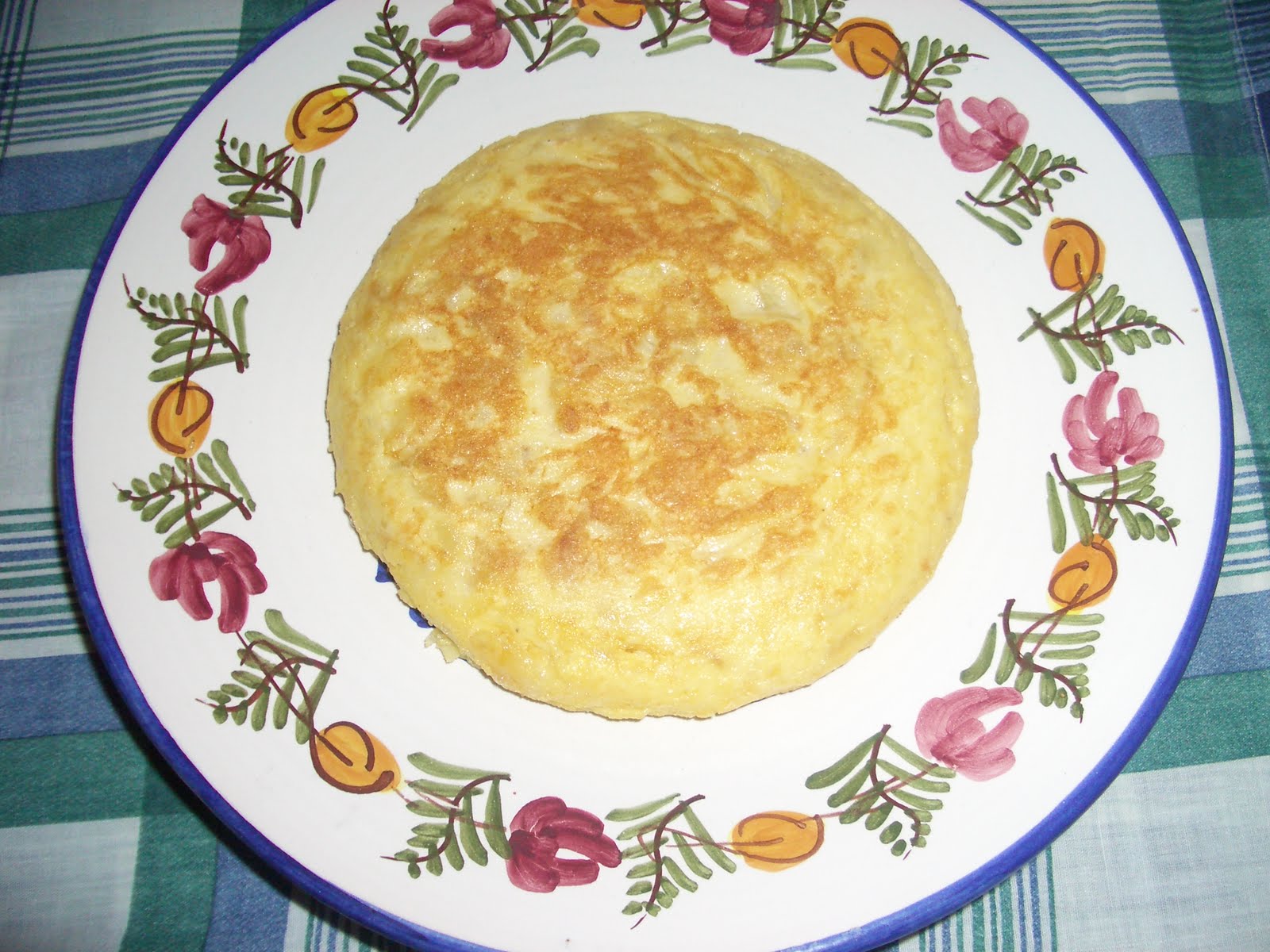
Ingredientes para 4 personas:

4 patatas tamaño medio a grande
4 huevos
1/2 cebolla
Sal
Lavar y pelar las patatas en rodajas finas, cortar la cebolla en juliana, mientras calentar una sarten bien llena de aceite, cuando el aceite esté muy caliente, echar las patatas y cebollas, primero a fuego fuerte, luego bajar a fuego moderado y tapar la sarten, procurando que asi la patata se poche, dar vueltas de vez en cuando para que no se queme, luego con la punta del cuchillo notareis que la patata se ha puesto blanda. Mientras tanto, coger los huevos y ponerlos en un bol y batir. Una vez hechas las patatas, sacarlas al bol con el huevo batido y mezclar bien.
Hecho ésto, se quita el aceite de la sarten, dejando sólo un poquito en su base y paredes laterales para que asi no se pegue la tortilla, echar las patatas con el huevo primero con el fuego fuerte para que cuaje rápido la base y bajar luego el fuego, darle la vuelta primero con fuego fuerte y luego bajo. Darle unas pocas vueltas para que se cuaje en su interior pero que no se quede demasiado dura. Emplatar y servir frio o caliente.
Se pueden acompañar de unos buenos pimientos verdes tipo padron o de Gernika o si lo preferis como plato combinado con lomo rebozado en huevo y pan rallado.

Potatoes omelette´s origin comes from the times of the America´s discovery, Hernan Cortes found that Aztecas used to do a similar egg´s omelettes, the potatoe "papa" in quechua language was also exported to Spain, the first official document about potatoe´s omelette was from Navarra, also there is a legend that General Zumalacarregui promote the consumption among the troops in the first blockade of Bilbao durante the first Carlist´s war. See wikipedia :  http://es.wikipedia.org/wiki/Tortilla_de_patatas

Whatever his origin is, what it is for sure is that this recipe has been extended all over Spain and most people like it.

Ingredients for 4 persons:
4 medium to big size potatoes
4 eggs
1/2 onion
Salt

Wash and peel the potatoes in thin slices, cut the onion also in slices, meanwhile heat the pan well filled with olive oil, when the oil is very hot, put the potatoes and onion inside, first to high fire, then low down to medium one and cover the pan, getting the potatoes become soft, remove from time to time so it does not burnt, after with the point of the knife touch the potatoe to see it has become soft. Meanwhile place the eggs in a bowl and whisk well, add the potatoes and mix everything.

Once done this, take out the oil from the pan, leave only a bit just to cover the buttom of the pan, place the potatoes with the egg in the pan, at maximum fire so it is set up, then low down to medium fire, turn the omelette and proceed the same. Turn a few times the omelettes until the eggs are completely set up. Present in a dish, you can serve the omelette hot or cold. Also you can accompany this with green small peppers or if you prefer a combined dish then put it with loin coated in breadcrumbs.

sábado, 4 de junio de 2011

CONEJO CON TOMATE/ RABBIT IN TOMATOE SAUCE


Hoy he preparado conejo en salsa de tomate, el conejo es un plato que ya viene de tiempos de antes de los romanos, ya en tiempos de los Fenicios en sus viajes por el mediterraneo descubrieron un tipo de conejo distinto al que ellos tenian, y se encontraba en la zona del norte de Africa y de España, una curiosidad es que los fenicios denominaron a España, "tierra de conejos " I-SHE-FAN-IM pasando luego en tiempo de los romanos a llamarse Hisfania o Hispania. Asi que realmente el nombre de nuestro pais es literalmente tierra de conejos por la gran abundancia que de ellos habia. Los romanos supieron apreciar el valor alimentario de este animal y lo que es más , los criaron en algunos sitios con mas acierto que en otros, ya que se llevaron para criar a las Islas Baleares donde hubo una plaga tan grande que tuvieron que pedir ayudar a Roma para poder combatirla. Dado que es un animal que esta principalmente localizado en la zona mediterranea es dificil encontrar este plato en cualquier otro pais del Norte de Europa y de America donde se usan más como animal domestico para niños que para comerlo, a pesar de que su carne es magra y baja en calorias y con un sabor muy caracteristico.

Los ingredientes para 4 personas son:

Un conejo troceado
Una cebolla
Un pimiento rojo o verde
Ajo a gusto
1/2 kilo tomate rojo maduro
Aceite, sal y pimienta
1 vaso de vino blanco
1 vaso de agua

En la olla a presión se pone el aceite, la cebolla picada, pimiento picado y el ajo laminado.
Un truco para que la cebolla se dore sin que se queme es echar un poco de sal y ponerlo a fuego medio-bajo. Cuando este todo pochado se introducen los trozos de conejo y se doran bien, luego se pone un vaso de vino blanco, se deja que se evapore un poco el alcohol y se echa un vaso de agua caliente. Cerramos la olla express y se cuece durante 20 minutos.
Mientras haremos la salsa de tomate, con cebolla y pimiento que primero se doran y luego se hecha el tomate rojo troceado, cuando el tomate esté blando se pasa con el pasapuré sobre el conejo y se deja que se absorban todos los sabores juntos, rectificando de sal y pimienta.


Today i have prepared rabbit in tomatoe sauce, rabbit is a dish which has its origin before the roman times in Spain, the Fenicians on their trips throughout the Mediterranean discovered a type of rabbit, quite different to their own ones, in North Africa and Spain. A surprising curiosity is that Fenicians called Spain," rabbit´s land" I-SHE-FAN-IM becoming later in Roman times His-fa-nia or Hispania, now España. So litterally the name of our country is "rabbit´s land" due to the great abundance of this animal on those times. Romans appreciated the alimentary value of the rabbit, also they were able to breed them. In one places with more skills than in others, they breed in Balear Islands where there was an uncontrolled plague and inhabitans had to ask for help to Rome to combat them. As it is an animal mainly located in the Mediterranean area is difficult to find this food in any other country in the North of Europe or North America where it is used more as a domestic animal for kids than for eating them, although their flesh is one of the most lean and low in calories.
Ingredients for 4 persons:
1 chopped rabbit
1 onion
1 green or red pepper
Garlic
1/2 kilos mature red tomatoe
Olive oil, salt and pepper
1 glass of white wine
1 glass of water

Put olive oil, chopped onion and pepper and sliced garlic in the pressure cooker.
If you do not want that the onions burnt put a bit of salt in it and to medium-low
 fire till it is sautéed, then introduce the chopped rabbit and brown properly, add the glass of wine, leave the alcohol evaporated for a while and add the glass of water. Closed the pressure cooker and leave for 20 minutes.
Meanwhile we will do the tomatoe sauce, brown first the onion and pepper, then add the chopped tomatoes, when the tomatoes are soft, put this in the food´s mill and place it together with the rabbit, mix well and serve in a nice dish.

domingo, 29 de mayo de 2011

PATATAS EN SALSA VERDE/ POTATOES IN GREEN SAUCE


Ingredientes para 4 personas

3/4 kilo de patatas
perejil,
2 dientes de ajo
1 huevo duro
aceite y sal

Se cortan las patatas en lonchas, el perejil y el ajo se cortan muy menudos
Se pone el aceite a calentar con un trocito de ajo, cuando el ajo esté dorado se retira y se echa al aceite las patatas, el perejil y el ajo.
Se cubre con agua caliente, se sala y hierve durante unos 15 minutos.
Luego se le echa el huevo duro picado y se cuece durante otros 5 minutos y se sirve
Como vereis es una receta rapida y muy sabrosa, hay un truco para que el ajo no pique, cuando lo peleis lo partis por la mitad y le quitais la parte central que es donde tiene su raiz.

Ingredients for 4 persons
3/4 kilo potatoes
Parsley
2 garlic cloves
1 boiled egg
Olive oil and salt

Cut the potatoes in slices, chop thin the parsley and garlic
Put olive oil in a casserole and heat it with a garlic clove, when the garlic is golden brown, take it away and put the potatoes, parsley and garlic. Cover them with hot water and boil for 15 minutes. Then add the boiled egg previously chopped and cook for 5 minutes more, then serve.
This recipe is very easy and quick. If you do not like that the garlic be very spicy then cut in half and take away the central part.

miércoles, 25 de mayo de 2011

TORRIJAS /FRENCH TOAST

Aunque este plato no es vasco, lo pongo porque mi abuela paterna era andaluza y mi madre lo suele hacer habitualmente, forma parte de los denominados "frutos de sarten" ,  tiene su origen en la Edad Media y era bastante usado porque se servia del pan duro de los dias anteriores, se hace principalmente en Semana Santa pero cualquier época de año es buena para tomarlas. Hay quien las hace con vino, en este caso las vamos a hacer clásicas con leche y canela.


Ingredientes:
Pan duro del dia anterior
Leche
Canela
Piel del limon
Azucar

Se pone a hervir la leche con un palo de canela en rama y la piel de un limón, mientras, se corta el pan en rodajas de un dedo de grosor y se colocan en una fuente honda. Cuando la leche haya hervido se quita la canela y la piel del limón y se echa sobre el pan, cuando el pan haya chupado la leche, se pone el pan sobre un trapo limpio. Se pasa por huevo y se van friendo con cuidado que no se quemen mucho, si haceis muchas mi consejo es que vayais cambiando el aceite para que no se os queden con aspecto quemado. Si no teneis pan duro, podeis usar pan de molde sin corteza cortado por la mitad aunque se quedaran mas finas de sabor estan igualmente ricas, como estas que hice por no tener pan duro a mano. A la hora de servir se pasan por una mezcla de azucar y canela (hay gente que le añade miel en su lugar). Quedan muy ricas también si se sirven junto a una bola de helado de vainilla o de turrón.

Although this is not a basque recipe, i put here as my father´s mother was from Andalusia and my mother used to do it, it forms part of the named " sauce-pan fruits", it has its origin in the Medieval ages and was often used due they used the hard bread from the previous days, we do it mainly in Easter time but you can cook it anytime of the year. There are people who makes them with wine but in this case we are going to do the clasic ones with milk and cinnamon.
Ingredients:
Stale Bread
Milk
Cinnamon
Sugar
Lemon skin

Boil the milk together with the lemon´s skin and the cinnamon stick, meanwhile cut the bread in thick slices of  1 finger width and place them in a deep tray. When the milk has boiled take out the cinnamon stick and the lemon´s skin and stir the milk on the bread, once the bread has soaked the milk , place it in a clean kitchen cloth. Coat the bread in beaten egg and fried in a sauce pan with olive oil, taking care in not burn them, if you are doing a huge quantity , then i advise to change the olive oil so they do not have a burn appearance. If you do not have stale bread then you can use loaf bread, although they will be thinner the taste will be equally good. When serving, coated them with a mix of sugar and cinnamon (there are people who prefer to coat them in honey). Also they are very tasty if you serve them together with vanilla ice-cream or nugat icecream.

domingo, 22 de mayo de 2011

ALUBIAS NEGRAS DE GERNIKA/GERNIKA´S BLACK BEANS


Ingredientes para 4 personas:
350 gramos de alubias negras de guernika
1 puerro
1 zanahoria
2 patatas medianas
150 gr de tocino fresco
1 trozo de oreja y un trozo de magra de cerdo
100 gramos de chorizo riojano
1 morcilla de burgo o en su defecto una morcilla tipica de tu region
Medio pimiento rojo

Se lavan las alubias y se ponen a remojar en el mismo puchero durante toda la noche.
En frio se pone el tocino, la carne, la oreja y la verdura. Se cuecen durante unos 45 minutos, romper el hervor con agua fria, se deja otros 15 minutos, se vuelve a romper el hervor con agua fria y se ponen las patatas troceadas y la morcilla. Se dejan otros 15 minutos más y se sirven.

Ingredients:
350 grs of black beans
1 leek
2 medium size potatoes
1 carrot
150 grs of fresh bacon
1 piece of pig´s ear
1 piece of pork´s loin
100 grs of  chorizo
1 black pudding
Half red pepper

We wash the black beans and put them in a pot with cold water during the whole night.
At the following morning we put inside the meat, the pig´s ear and the vegetables cooking them in medium fire during 45 minutes, we break the boil with cold water, leave cooking again for 15 minutes, breaking the boil again with cold water and putting here the black pudding and the potatoes. Leave it cooking for 15 minutes and serve hot.

domingo, 13 de marzo de 2011

Mi mundo y la cocina/My world and Cooking

Desde pequeña he respirado los olores y percibido los sabores de la cocina de mi amatxu, también los de mi abuela, era el Universo de la mujer concentrado en pocos metros cuadrados, alli se charlaba de todas las cosas, de los buenos momentos, de los malos, se disfrutaba hablando mientras se cocinaba, la familia y los amigos siempre paraban en la cocina de mi amatxu, que recuerdos...
siempre he ligado mis emociones a un buen momento en torno a la mesa, a los preparativos de Navidad o de los cumpleaños, o esos fines de semana donde mi ama se esmeraba para que todo estuviera a punto. lo unico malo es que en esos momentos no te das cuenta y tienes otros intereses y no me esforzaba por aprender realmente a cocinar, hasta que me casé...
Me casé y no sabia ni hacer un huevo frito, pero todas esas experiencias y emociones volvieron con naturalidad a mi mente, se me aparecian imagenes de mi madre haciendo una tortilla de patata, o preparando unos caracoles a la vizcaina, esas imagenes son las que me han ayudado a hacer que la cocina sea para mi un mundo nuevo y con muchas posibilidades, donde se pueden unir la tradición y la creatividad.
Mi amatxu ya tiene 79 años y le he pedido esta vez con ruegos que ponga en una libreta sus recetas, no quiero que se pierdan, quiero que sus conocimientos traspasen a sus niet@s, que perdure esa sabiduria culinaria que le fue transmitada por su madre y por la madre de su madre, generaciones enteras conectadas por las ganas de hacer un buen plato y transmitar a través de ellos el amor que sienten hacia los suyos.

Since i was little i have breathed the smells and felt the tastes of my Amatxu´s cooking also the ones of my grandmother, it was the women´s Universe concentrated in a few square meters, where they talked about life, the good things and bad ones, we enjoyed talking meanwhile cooking, family and friends always stopped in my mother´s  kitchen, what memories¡¡¡...
i have always linked my emotions to a good moment around the table, doing the preparations for Christmas or for a birthday party or the long weekends where my mother did her best to have everything set up, the only bad thing was that in those moments you were not aware and had other interests and did not effort myself to learn...until i got married...
Yes, i got married and did not know even how to fry eggs, but all those experiences and feelings came to my mind naturally, it appeared images of my mother doing a Spanish omelette or Bizkaine Scargotts, these images helped me to make the Cooking a new world with a lot of new opportunities where i can combine the tradition and  the creativity.
My mother is now age 80 and at the end she has accepted to writte down of her recipes after begging her, i do not want this tradition loose and want her kwnoledge goes to her grandsons and granddaughters, that the culinary knowledge that was transmitted by her mother and her´s mother mother, entire generations conected with the aim to do a good recipe which shows through them the love these mothers felt for their family.